

To prepare your car for winter, have the battery load-tested, check the coolant and washer fluid, replace worn wiper blades, and get winter tires on before the first hard freeze. Then set tire pressure to the door-jamb spec, confirm the heater and defrosters work, and pack an emergency kit. In Washington, studded tires are legal only from November 1 through March 31.
Valley Auto Liquidators has kept Inland Northwest drivers moving from East Sprague Avenue since 2004, and most of the cold-weather breakdowns that leave people stuck on a December morning trace back to something a fall check would have caught: a tired battery, thin tread, or a washer reservoir full of summer fluid. This checklist covers what to inspect, what to replace and what to carry, in the order it makes sense to do it. If you're still deciding whether your current car is the right tool for snow, our roundup of the best used AWD rides under $20K for Spokane winters covers that question first.
Winter Prep in One Line
Make sure the car will start, see, grip and wait. A healthy battery, clear glass with working wipers and defrosters, tires with real tread, and a stocked emergency kit handle the failures that most often turn a winter commute into a roadside wait. Everything else on this checklist supports those four.
Spokane winters are less about deep powder than about what the cold does to a car overnight. A battery that cranked fine in October can give up on a January morning, freezing fog can glaze bridges and overpasses before the rest of the road, and repeated freeze-thaw cycles turn yesterday's slush into ruts of ice. Prep is cheap next to a tow, and it's far easier to schedule before the first storm sends everyone to the shop at once.
The checklist below is organized around timing. Some tasks belong in October, one has to wait for November 1, and a few, like checking tire pressure, continue all season. Work through it once in the fall, keep the kit stocked, and you'll head into the season with a car that starts, stops and steers the way it should.
How to Prepare Your Car for Winter in Three Stages
Winterizing a car isn't a single appointment. It's three different kinds of work, and thinking about it that way keeps the important items from getting lost between an oil change and a tire swap. Each stage targets a different way winter causes trouble.
Here's how to break it down:
1. Test What the Cold Weakens
Batteries, coolant, belts and hoses all lose their margin as temperatures drop. A battery load test, a coolant freeze-point check and a close look at the drive belt for cracks show you what's likely to fail before it actually does.
2. Upgrade Grip and Visibility
Winter tires or all-seasons with healthy tread, fresh wiper blades, de-icing washer fluid, and clean, working headlights. These items decide whether you can stop, steer and see on a dark, slushy evening drive home.
3. Pack for the Worst Case
An emergency kit, a full tank or charge, and a plan for any mountain pass travel. Most winter trips end without drama, but a slide-off or a closed highway can leave you waiting in the cold for hours, and that's when the kit earns its trunk space.
Timing matters as much as the tasks. Daylight saving time ended on November 1, 2026, so most Spokane commutes now finish after dark, which puts extra weight on headlights, wipers and defrosters. Aim to finish the first two stages before the first measurable snow, when service schedules and tire shops tend to book up quickly.
If you only have time for one item, make it the battery test. Cold weather rarely kills a healthy battery. It exposes one that was already weak, and the first single-digit morning of the year is usually when that weakness shows up, often in a parking lot far from home.
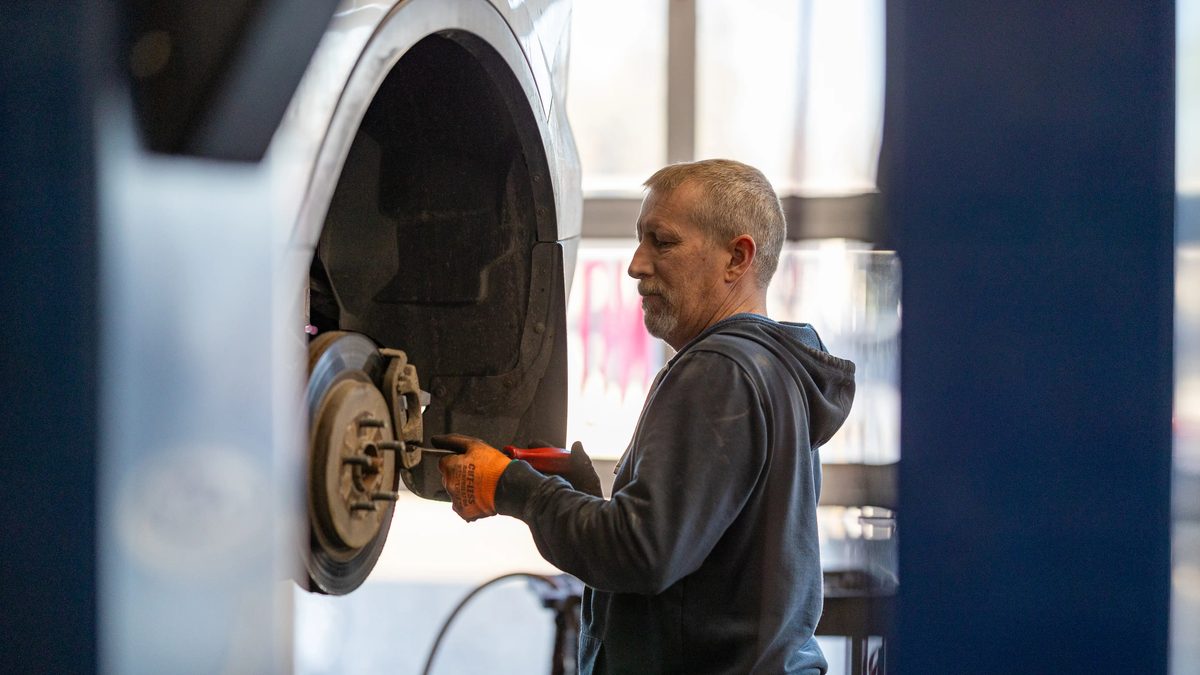
A fall service visit with the wheels off shows brake and tire wear before the first snow, not after it
Winter Car Maintenance Checklist for Spokane Drivers
Most of a winter car maintenance checklist can be handled in a single service visit or a Saturday morning in the driveway. The goal is to find anything that's marginal now, because marginal parts tend to fail on the coldest mornings, not the mild ones.
Work through these before the first hard freeze:
- Battery and charging system: Ask for a load test rather than a simple voltage reading, and check the date code on the battery case. Clean any white or green corrosion off the terminals and make sure the hold-down bracket is tight.
- Coolant (antifreeze): Check the level with the engine cold and test the freeze protection. Use the coolant type your owner's manual specifies, since mixing incompatible formulas can cause problems of its own.
- Oil and filter: If you're close to your next change, do it now and use the viscosity listed in the owner's manual. Oil of the correct cold-weather grade reaches engine parts faster on a frozen start.
- Wipers and washer fluid: Replace blades that streak or chatter, and fill the reservoir with winter washer fluid that contains a de-icer. Summer fluid can freeze in the lines and leave you with no way to clear road spray.
- Lights, heater and defrosters: Walk around the car with the headlights, brake lights and turn signals on. Then confirm the heater blows hot and the front and rear defrosters clear the glass within a few minutes.
- Brakes, belts and hoses: Have the brakes checked for even pad wear, and the drive belt and hoses checked for cracks, bulges or soft spots. Rubber gets brittle in the cold, so a worn belt is more likely to snap in January than in July.
Tire pressure deserves its own reminder. Pressure drops as the air cools, roughly 1 psi for every 10-degree dip, so tires set on a warm October afternoon can be noticeably low by the first cold snap. Check them after the car has been parked overnight and inflate to the number on the driver's door jamb, not the maximum printed on the sidewall.
Test Your Battery Before the First Hard Freeze
According to AAA, a car battery loses about 35 percent of its strength at 32°F and about 60 percent at 0°F, while a cold engine can need up to twice the usual current to start. Most batteries last three to five years. If yours is three or older, a fall load test is the cheapest insurance on this list.
Cold weather also changes how much fuel you burn. According to the federal fueleconomy.gov site, a gas car's city mileage can be roughly 15 percent lower at 20°F than at 77°F, hybrids can drop 30 to 34 percent, and an electric vehicle's range can fall by as much as 41 percent in mixed driving. Long warm-up idles make it worse; most manufacturers recommend driving off gently after about 30 seconds. EV and plug-in hybrid owners should plug in overnight whenever they can.
How to Prepare a Used Car for Winter
If you bought a used car since last winter, don't assume the previous owner handled any of this. Find the DOT code on each tire sidewall; its last four digits show the week and year the tire was made, and many tire makers recommend a closer inspection once a tire passes five or six years old, because rubber hardens with age. Check the date sticker on the battery, look for coolant and brake fluid service in the records, and if the vehicle has 4WD, confirm it engages and the dash indicator lights up.
Look underneath, too. Inland Northwest roads are treated with de-icers and anti-icing liquids all winter, and a vehicle that has already spent several seasons here may show surface rust on brake lines, fuel lines and the frame. Rinsing the undercarriage every few weeks during the season helps slow that down, and the same inspection habits that matter when you buy a used car are worth repeating every fall.
Winter Tires in Spokane: When to Switch and What Washington Allows
Tires do more for winter safety than any drivetrain. All-wheel drive helps you get moving, but braking and steering depend entirely on the four small patches of rubber touching the road, and all-season tread compounds stiffen as temperatures fall. That's why the timing of your switch, and the type of tire you choose, matter so much on Spokane-area roads.
Your Spokane Winter Prep Timeline
| Step | What to Do | When | What You'll Need |
|---|---|---|---|
| 1 | Test the battery and check coolant freeze protection | Early to mid-October | Battery load test, coolant tester or a service visit |
| 2 | Replace wiper blades and switch to winter washer fluid | Mid to late October | Correct blade sizes, de-icing washer fluid |
| 3 | Mount studless winter tires, or confirm all-seasons have at least 4/32 inch of tread | When daytime highs settle near 45°F, usually late October to early November | Winter tires (ideally on their own wheels), a tread depth gauge or a quarter |
| 4 | Install studded tires, if you use them | November 1 or later | Studded tires, plus a removal appointment by March 31 |
| 5 | Stock the emergency kit and check tire pressure monthly | Before the first snow, then through March | Kit items, a tire gauge, the door-jamb pressure spec |
Many tire makers suggest swapping to winter tires once daytime temperatures hover around 45°F, which in the Spokane area usually arrives in late October or early November. Studless winter tires are legal year-round in Washington, so there's no reason to wait for a calendar date if a cold snap comes early. Mounting them on a dedicated set of wheels makes each fall and spring changeover quicker and avoids remounting tires twice a year.
To check tread, slide a quarter into the shallowest groove with Washington's head pointing down. If you can see the top of his head, you have less than about 4/32 inch left, which is too thin for dependable snow traction. If a penny shows the top of Lincoln's head, you're at or below 2/32 inch, the point at which NHTSA says a tire needs replacing.
Washington Studded Tire Dates and Traction Tire Rules
Studded tires are legal in Washington only from November 1 through March 31. WSDOT doesn't grant individual exceptions or out-of-state waivers, and drivers who leave studs on after March 31 risk a $137 ticket. Washington also charges a $5 fee on each new studded tire sold. Idaho allows studs from October 1 through April 30, so drivers commuting from Coeur d'Alene or Post Falls should remember that Washington's tighter dates apply once they cross the state line.
When traction tire or chain requirements are posted on a mountain pass, an approved traction tire under Washington's traction tire rule, WAC 204-24-040, needs at least 4/32 inch of tread and an M+S or mountain-snowflake marking on the sidewall. All-wheel-drive vehicles under 10,000 pounds can skip installing chains under a standard chains-required sign, but only with all wheels powered, approved traction tires mounted and a set of chains on board. When signs read chains required on all vehicles, AWD has to chain up too, and ignoring a posted chain requirement can cost $500.
Winter Emergency Car Kit and Driving Tips for Spokane Roads
Preparation doesn't stop at the car itself. Most Spokane-area winter trips are short, but a slide-off on an icy ramp or a closure on I-90 can turn a 20-minute drive into a long wait, and what you carry decides how that wait goes.
Here's how to stock the car and adjust your driving for the season.
What to Pack in a Winter Emergency Car Kit
NHTSA's winter driving tips recommend carrying a snow shovel, broom and ice scraper, sand or kitty litter for traction if you get stuck, jumper cables, a flashlight, flares or emergency markers, and blankets, along with a phone charger, water, non-perishable food and any medication you need. Add gloves, a hat and a warm layer, since many people drive in lighter clothes than they'd want to wait in. If you're ever stranded, stay with the vehicle, keep the exhaust pipe clear of snow, and run the engine only in short bursts to stay warm, which lowers the risk of carbon monoxide building up inside.
Winter Driving Tips for Spokane and the I-90 Corridor
Slow down before you need to, and leave several times your usual following distance on snow and ice. Bridges and overpasses freeze first, so treat river crossings and highway ramps with extra caution even when surface streets look merely wet. Clear snow off the whole car, including the roof, hood and lights, before you pull out. Give plows plenty of room, keep the tank at least half full, and check WSDOT pass conditions or Idaho 511 before any trip over Fourth of July Pass, Lookout Pass or Snoqualmie Pass.
| Trip Type | What to Carry | Tire Setup | Best Habit |
|---|---|---|---|
| Around Town (Spokane, Spokane Valley, Liberty Lake) | Scraper and brush, jumper cables, blanket, phone charger | Winter tires, or all-seasons with at least 4/32 inch of tread | Leave early, brake gently, and watch for black ice on bridges and ramps |
| Mountain Passes and I-90 Travel | Full emergency kit, chains that fit your tires, extra food, water and warm layers | Approved traction tires (M+S or mountain-snowflake, 4/32 inch or more) with chains on board | Check pass reports before leaving and tell someone your route and arrival time |
Longer winter drives deserve extra margin. Valley Auto Liquidators serves buyers from as far away as western Montana, and the roughly three-and-a-half-hour I-90 drive from Missoula crosses Lookout Pass at the Idaho-Montana line. If you're one of the used car shoppers coming from Missoula, MT, pack the full kit, carry chains, and plan the trip so you're over the pass in daylight.
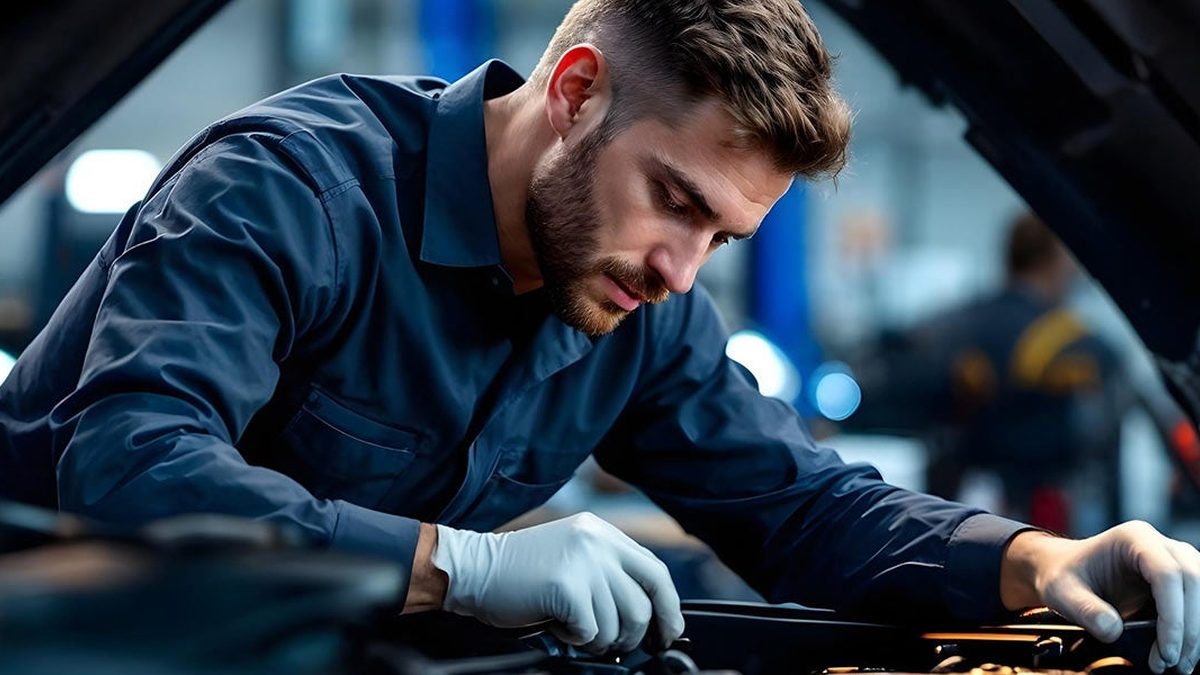
Battery, belt, hose and coolant checks under the hood catch the parts most likely to fail on a cold morning
Why Spokane Valley Drivers Winterize With Valley Auto Liquidators
Whether you need full winter car prep or just a battery test and new wipers, the questions worth asking any shop are the same. Will they test the battery under load? Will they show you your actual tread depth? Will they tell you what's urgent and what can wait until spring? We'd rather answer those up front than leave you guessing at the counter.
At Valley Auto Liquidators, here's how we help you get ready for winter:
Battery Testing and Replacement
Our service team tests your battery and charging system and installs a new battery when yours is near the end of its life, so a cold morning doesn't get to decide the timing for you.
Winter Tires, Mounting and Alignment
We sell new tires, including winter tires, and our technicians mount and balance them. Wheel alignment is available too, which helps new tires wear evenly through a season of ruts and potholes.
Inspections and Fluid Service
A multi-point inspection looks at brakes, filters, fluids and more, so you know what needs attention before the snow arrives. Oil changes and fluid services can be handled in the same visit.
We've been family-owned on East Sprague Avenue since 2004, and our ASE-certified technicians work on all makes, whether or not you bought the vehicle from us. If your current car isn't worth winterizing for another season, browse our used cars for sale in Spokane, WA for AWD SUVs, 4x4 trucks and efficient commuters, and we can appraise your trade-in during the same visit.
Our service department is open Monday through Friday from 8:30 AM to 4:30 PM, so the easiest approach is to book a weekday slot in October or early November, before the first storm fills the schedule. Tell us what you're hearing, seeing or worried about when you request the appointment, and we'll plan the visit around it.
Get Your Car Winter-Ready in Spokane Valley
The best time to prepare your car for winter is before you need to. A tested battery, fresh wipers, the right tires and a stocked kit cost far less than a tow, and they turn the first snow of the season into an ordinary drive instead of a long roadside wait.
Request a service appointment, ask about winter tires, or stop by 13818 E Sprague Ave, Spokane Valley, WA 99216. Our service department is open Monday through Friday from 8:30 AM to 4:30 PM at (509) 927-1053, and our sales team is open Monday through Saturday from 9 AM to 7 PM and Sundays from 10 AM to 5 PM at (509) 792-3003.
Whether you're driving in from Spokane, Liberty Lake or Coeur d'Alene, bring your car and your questions before the snow does. You'll leave knowing exactly what's ready for winter and what to keep an eye on as the season goes on.